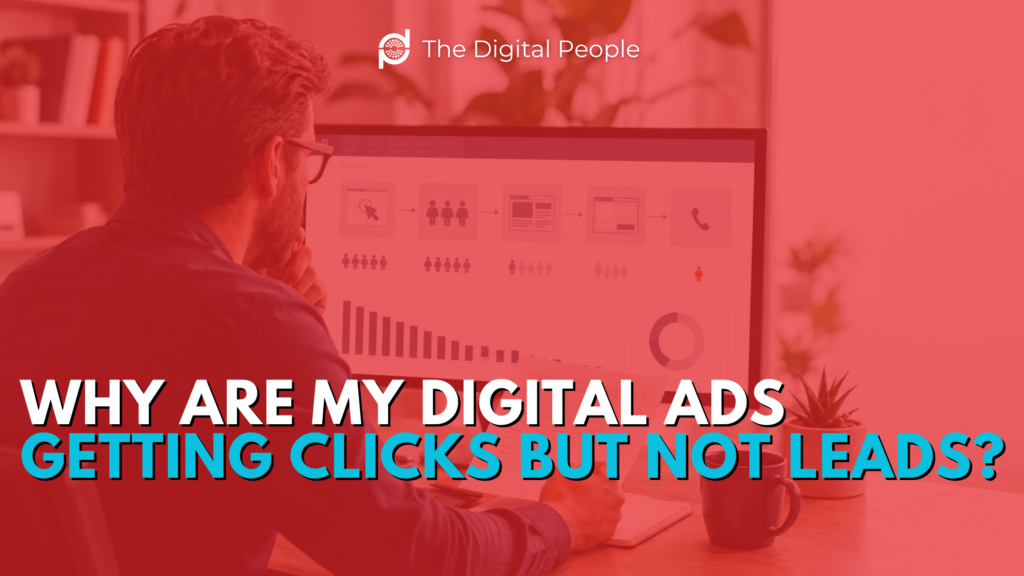
A campaign can generate clicks and still fail the business. That does not automatically mean the ad platform is broken. It means the path between attention and revenue has a leak, and the click is only one point along that path.
The fastest way to waste money is to optimize the visible number while ignoring the decision process behind it. A low cost-per-click can look efficient even when the wrong people are clicking, the landing page creates doubt, conversion tracking misses real inquiries, or leads sit unanswered.
Start with the right diagnosis
Use this sequence: traffic quality, message match, landing-page friction, tracking accuracy, lead quality, and response process. Do not change all six at once. If you rebuild the audience, creative, page, and offer simultaneously, you lose the ability to identify what fixed the problem.
1. The campaign is attracting curiosity, not buying intent
Some messages produce attention because they are entertaining, broad, or emotionally charged. That can be useful for awareness, but it does not mean the audience is ready to act. Review the search terms, placements, audience signals, geography, and device mix behind the clicks. Look beyond the platform’s targeting label and inspect who actually arrived.
Diagnostic question: Does the ad promise something a qualified prospect wants, or something almost anyone would click?
2. The ad and landing page tell different stories
A person clicks because the ad creates an expectation. If the landing page changes the offer, uses different language, hides the promised information, or drops the visitor on a general homepage, confidence falls. Repeat the core promise, audience, proof, and call to action immediately. Message match reduces the mental work required to decide.
A campaign cannot convert consistently if the website creates confusion or lacks the information searchers need.
Diagnostic question: Can a visitor confirm within five seconds that they reached the right place?
3. The page creates anxiety at the exact moment you ask for action
A long form, vague next step, slow mobile load, missing phone number, weak proof, or unclear privacy expectations can stop a motivated prospect. Every additional field asks for another small commitment. Ask only for what is necessary at that stage, explain what happens next, and place relevant proof near the call to action.
Diagnostic question: What does the visitor fear will happen after clicking “submit”?
4. Conversion tracking is incomplete or misleading
The platform cannot optimize toward outcomes it cannot observe. Confirm that calls, forms, appointment bookings, purchases, chat actions, and valuable offline outcomes are tracked correctly. Test every path on desktop and mobile. Remove duplicate events and separate shallow actions, such as a page view, from real business conversions.
Google’s enhanced conversions use hashed first-party data to improve conversion measurement. For lead-driven businesses, sending qualified offline outcomes back to the advertising platform can also help distinguish a real opportunity from a low-value form fill. This requires proper consent, privacy practices, and technical implementation.
Diagnostic question: Is the platform learning from revenue-producing actions or from whatever event was easiest to configure?
5. The offer asks for too much, too soon
A cold prospect may not be ready to “schedule a consultation” after one ad. Match the ask to the level of trust. A pricing guide, assessment, estimate, checklist, demonstration, or clear phone conversation can lower commitment without attracting people who only want freebies.
Diagnostic question: Is the next step proportionate to the visitor’s awareness and risk?
6. Leads are arriving, but the response process is losing them
Marketing does not end at submission. Track time to first response, call answer rate, number of contact attempts, appointment-set rate, show rate, close rate, and reason lost. A campaign can look weak in the ad dashboard when the real breakdown occurs in the inbox or phone queue.
Diagnostic question: What percentage of qualified leads receive a prompt, useful response from a person who can move the conversation forward?
7. The campaign is optimized for volume instead of value
Ten weak leads are not better than three qualified opportunities. Define a qualified lead before launching the campaign. Then connect campaign reporting to accepted leads, pipeline, sales, and customer value. Cost per lead without lead quality can reward the wrong behavior.
A practical 30-minute audit
- Open the campaign’s actual search terms, placements, audiences, geography, and devices.
- Click every active ad from a mobile device and compare its promise with the landing page.
- Submit each form and call each tracked number; confirm the action appears once in analytics and the ad platform.
- Review the last 20 leads and label each qualified, unqualified, duplicate, unreachable, or lost in follow-up.
- Calculate cost per qualified lead and cost per sale, not only cost per click or form fill.
- Choose the single largest leak and test one controlled change.
The bottom line
Google says enhanced conversions can make your existing tracking more accurate by securely using customer information, such as email addresses or phone numbers. But better tracking cannot fix the wrong audience, an offer people do not want, or a sales process that fails to turn leads into customers.
Clicks prove that an ad earned attention. They do not prove that the right person saw the right promise, trusted the landing page, completed the action, entered the tracking system correctly, or received effective follow-up.
The Digital People builds campaigns around defined goals and detailed reporting, then connects the ad, landing experience, conversion measurement, and optimization process. If your dashboard shows activity but your sales pipeline does not, the next step is a full funnel campaign audit. Check out our latest blog, How Can My Business Show Up in ChatGPT and Google AI Results?
Frequently Asked Questions
1. Why are my digital ads getting clicks but not leads?
Digital ads may get clicks without leads when the campaign attracts curiosity instead of buying intent, the landing page creates confusion, conversion tracking is incomplete, or leads do not receive effective follow-up.
2. Can a low cost-per-click still mean my digital ad campaign is failing?
Yes. A low cost-per-click can appear efficient even when the wrong people are clicking, the landing page creates doubt, or the campaign generates low-quality leads.
3. How does landing-page friction affect digital ad conversions?
Long forms, slow mobile load times, missing contact information, weak proof, vague next steps, and unclear privacy expectations can prevent qualified visitors from converting.
4. Why is conversion tracking important for digital ads?
Conversion tracking helps advertising platforms measure calls, forms, appointment bookings, purchases, chat actions, and valuable offline outcomes. The platform cannot optimize toward results it cannot observe.
5. How can I turn more digital ad clicks into qualified leads?
Review traffic quality, message match, landing-page friction, tracking accuracy, lead quality, and the response process. Choose the largest leak and test one controlled change at a time.